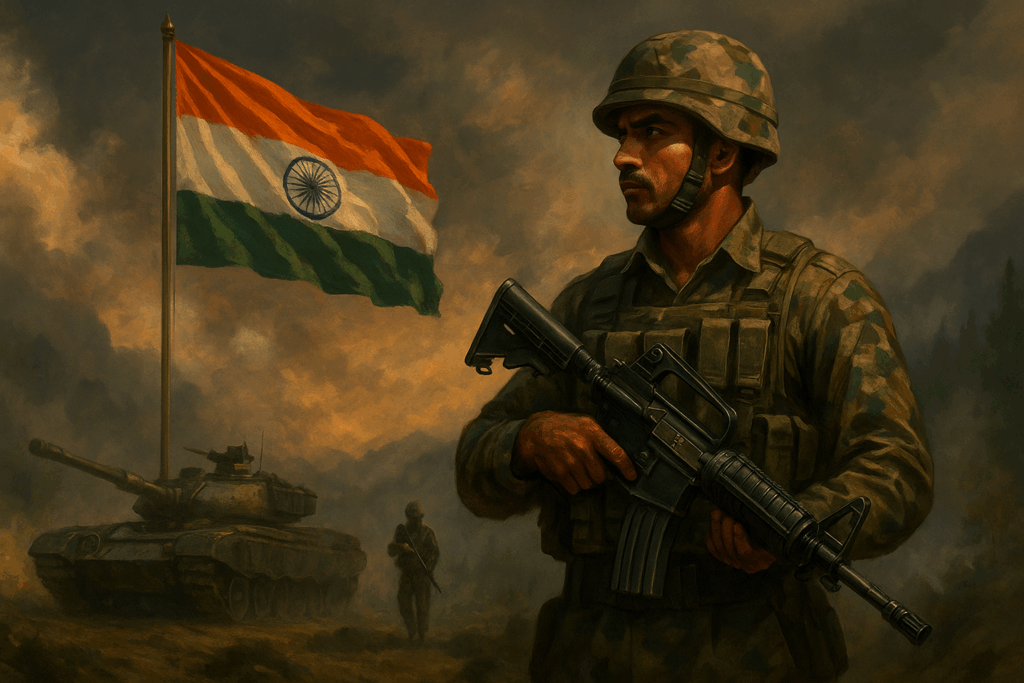
In the dynamic geopolitical chessboard of South Asia, India has long stood as a resilient democracy amidst turbulence, encircled by adversarial forces and ideological extremism. The recent terror strike in Pahalgam, which claimed the lives of several brave Indian soldiers and innocent civilians, is not just another tragic incident. It represents a crucial inflexion point in India’s counter-terrorism and strategic defence policy. India’s decisive and immediate response to the Pahalgam attack, culminating in Pakistan’s apparent military capitulation, has been dubbed by many as a geopolitical masterstroke. But what led to this swift and powerful retaliation? And why is this considered a pivotal moment in India’s modern strategic history?
Let us examine this from the lens of great Indian nationalism, regional stability, global diplomacy, and military supremacy.
The Pahalgam Attack: A Provocation Too Far
Pahalgam, a serene town in Jammu and Kashmir known for its scenic beauty and religious significance, was rocked by a meticulously planned terror attack that bore the hallmarks of Pakistani deep-state involvement. The attackers, heavily armed and tactically trained, ambushed an army convoy, resulting in a devastating loss of life.
This attack was not merely symbolic; it was meant to destabilise the security ecosystem in Kashmir during a peak tourism season and ahead of important regional electoral activities. Intelligence reports pointed squarely toward cross-border elements with links to Lashkar-e-Taiba and Jaish-e-Mohammed – groups with known patronage of the ISI (Inter-Services Intelligence) of Pakistan. This was not a rogue act of militancy, but a calculated provocation aimed at testing India’s strategic resolve.
India’s Tactical Response: Precision, Power, and Political Will
India’s response was not knee-jerk, but deliberate and devastatingly effective. Under the leadership of Prime Minister Narendra Modi and with the operational prowess of the Indian Armed Forces, a tri-pronged offensive was launched:
1. Surgical and Cyber Strikes:
India’s elite Para SF units conducted covert operations across the Line of Control (LoC), dismantling major terror launchpads. Simultaneously, India’s cyber command initiated a strategic digital offensive, neutralising critical communication infrastructures supporting militant networks. This included hacking propaganda websites, disrupting ISI-linked digital platforms, and cutting off encrypted communication between handlers and ground-level operatives.
2. Air Dominance Operations:
The Indian Air Force (IAF), leveraging its technological superiority, targeted key terror infrastructure deep within Pakistan-occupied Kashmir (PoK) and in areas along the Punjab belt. With the deployment of Rafale fighter jets, Sukhoi-30MKIs, and Heron drones, India showcased an unprecedented coordination of precision and firepower. The air strikes not only demolished camps but also targeted fuel and ammunition depots, thereby paralysing logistic support systems.
3. Economic and Diplomatic Isolation:
India activated its diplomatic arsenal, mobilising support from global powers including the US, France, Israel, and Japan. Sanctions and FATF-related pressures on Pakistan were amplified. India’s trade ties with Pakistan were completely severed, and diplomatic missions in Islamabad were reduced to the bare minimum. Pakistan faced international condemnation, further deepening its economic crisis. The suspension of the Indus Waters Treaty implementation talks served as a warning shot of India’s ability to leverage hydro-diplomacy.
This combined military-diplomatic-economic response reflects India’s growing stature as a global strategic player, not just a regional power.
Pakistan’s Surrender: A Strategic Collapse
Faced with overwhelming pressure, internal dissent, and economic fragility, Pakistan quickly sought de-escalation. The political and military leadership in Islamabad failed to muster a coherent counter-narrative or strategic countermeasure. For the first time since the 1971 war, murmurs of surrender from within Pakistani defence circles became public. The following developments indicate Pakistan’s surrender in both tactical and moral terms:
- Withdrawal of troops from forward posts in PoK.
- Public appeal by the Pakistani PM for UN intervention.
- Internal military purges within the ISI and the Army.
- Acceptance of India’s terms in backchannel diplomacy mediated by the UAE.
- Resumption of ceasefire understanding along the LoC with stricter enforcement.
- Admission of terror networks operating from within Pakistan by civilian leaders under international pressure.
Pakistan’s capitulation is a direct result of India’s superior military planning, credible deterrence posture, and robust public support backed by nationalistic unity.
A Masterstroke in Geopolitical Signalling
India’s actions send a clear message to the world: the era of strategic restraint is over. The Pahalgam response sets a precedent that any attack on Indian soil will invite swift, proportionate, and multi-dimensional retaliation. Key geopolitical takeaways include:
- Reinforcing Red Lines: India has now redefined its strategic red lines. Any attack by state-sponsored non-state actors will be treated as an act of war.
- Regional Deterrence: India’s decisive stance deters China from any adventurism along the LAC, given the possibility of coordinated retaliation.
- Strategic Autonomy in Action: India acted independently, without waiting for global consensus. This marks the maturity of India’s foreign policy doctrine.
- Message to Hostile Neighbours: Whether it is the proxy war waged by Pakistan or grey-zone warfare adopted by China, India has shown it can operate decisively in both conventional and unconventional domains.
Nationalism Redefined: A New Doctrine of Indian Assertiveness
The response to Pahalgam has rekindled a wave of nationalism rooted in dharmic duty, self-respect, and collective pride. This isn’t jingoism but strategic assertiveness. From Kautilya to Subhas Chandra Bose to Sardar Vallabhbhai Patel, India’s legacy has always included assertive action in the face of existential threats.
- Public Sentiment: A massive upswing in support for the armed forces and government policies was observed across states.
- Cultural Confidence: Bharat is now embracing its historical legacy as a civilisation-state that prioritises sovereignty, security, and self-determination.
- Mainstreaming Strategic Thinking: From university curricula to public discourse, national security awareness has become part of the Indian consciousness. This is essential for a strong democratic ethos.
This nationalist wave aligns with the global trend of rising civilizational states – China, Israel, and now India – asserting themselves unapologetically.
Global Response: From Caution to Congratulations!
While traditional Western powers initially urged restraint, the scale and sophistication of India’s operations won global admiration. Key developments include:
- UNSC Emergency Session: No formal condemnation of India; many nations justified its right to self-defence.
- FATF Push: A renewed move to blacklist Pakistan, supported by India’s allies.
- Military Ties Strengthened: Post-operation, defence deals were fast-tracked with Israel and the USA.
- Media Coverage: International media houses such as The New York Times, BBC, and Le Monde acknowledged India’s right to defend its sovereignty, a significant shift from earlier narratives that called for restraint.
The operation altered global perceptions of India, from a reactive democracy to a decisive global actor.
The Way Forward: Strategic Vigilance and Long-Term Planning
While the victory narrative dominates current discourse, India must focus on long-term strategic vigilance:
- Intelligence Modernisation: AI-backed predictive analytics, better border surveillance, and counter-radicalisation efforts.
- Internal Security Reforms: Strengthening NIA, NSG and CAPFs to handle urban warfare and lone-wolf threats.
- Geo-Economic Push: Isolating Pakistan via trade diplomacy, water treaties (Indus Waters Treaty), and regional influence in SAARC and SCO.
- Civil-Military Fusion: Greater cooperation between defence R&D and the private sector to produce indigenous defence tech.
- Counter-Propaganda: India must invest in psychological warfare and counter-narrative campaigns globally, ensuring the truth about its actions and justifications are communicated effectively.
Conclusion: A Bharat Reborn
India’s tactical response to the Pahalgam attack is not just a military event; it is a defining moment in its civilizational journey. It marks a shift from centuries of reactive suffering to proactive sovereignty. India has demonstrated that its nationalism is not rooted in hatred, but in strength, vision, and clarity of purpose.
From the battlefields of Kurukshetra to the valleys of Kashmir, Bharat has always risen when tested. The Pahalgam operation is a clarion call to the world that India will protect its dharma, its people, and its future, with valour and vision.
In the words of Sri Aurobindo, “India is rising. She is awake, and her soul has found its voice.” And that voice now echoes with military precision, diplomatic dexterity, and national unity.